
Problematic Pancreas? Ten Herbs that Can Prevent or Address Pre-Diabetes and Type II Diabetes

Is your pancreas giving you early signs of trouble? Or have you been recently told by your physician that you are prediabetic or as I was recently told not quite prediabetic but only a few numbers outside of the prediabetic range? Preventive medicine is always the best medicine, so what can you do today to reverse insulin resistance, and other pancreatic trouble?
First, How Can You Spot Early Signs of Prediabetes and Diabetes? Common Signs Include:
- Frequent urination, especially at night, may be an early sign of high blood sugar levels. High blood sugar levels increase stress on the kidneys which work to reabsorb sugar into the bloodstream. When the kidneys are unable to complete the absorption function urination helps eliminate the extra glucose from the body.
- Chronic irritability and frequent mood swings may indicate erratic blood sugar levels. Low blood sugar is known to make some people feel confused, irritable and jittery whereas high blood sugar levels can lead to feeling tense, angry, foggy and lethargic.
- Chronic vaginal yeast infections, as extra sugar in the blood encourages yeast to grow.
- Recurrent infections such as skin, bladder and urinary tract infections as high blood sugar impairs the immune system, making it more difficult to fight off infections.
- Blurry vision. Rapid blood sugar level changes may cause your eyes to get cloudy or swell, resulting in blurry vision.
- Erectile Dysfunction and or low sex drive. Some research studies indicate that inflammation caused by diabetes may affect the part of the brain that controls sexual desire.
- Unexplained nausea and constipation. High blood sugar levels often slows the digestive process resulting in feeling unusually full, nauseated, or constipated.
- Slow-healing cuts. High blood sugar levels slows wound healing.
- Patches of dark leathery skin, most commonly found in the creases of the neck, armpits, breasts, elbows, knees and groin. It also can show up on the face, hands and feet. Medically this condition is called Acanthosis Nigricans.
- Excess facial hair in women. High levels of insulin due to insulin resistance can stimulate cells to produce more testosterone leading to unnaturally coarse and abundant facial hair on women.
- You have a history of hypoglycemia or hyperglycemia episodes.
Thirteen Herbs that Will Improve Your Pancreas Function, and Regulate Your Blood Sugar Levels:
Aloe Vera, there have been a number of recent research studies that indicate aloe vera can lower and regulate blood sugar levels.
Application: In one study those who took 200mg of aloe vera powder had the most marked improvement of blood sugar regulation among research participants. A separate research study showed that ingesting two tablespoons (1 tablespoon twice a day) of Aloe Vera juice per day lowered blood sugar levels in those with type 2 diabetes.
Burdock Root (Arctium lappa),a powerhouse of an herb most commonly used to support the liver and detoxification, known to lower blood sugar in diabetics.
Application: Fresh root is the most potent, however two grams of powdered root in capsules will also give good affect.
Cinnamon (Cinnamomum verum) will quickly and dramatically lower fasting blood sugar levels and with consistent use it will improve insulin sensitivity. While both Cassia and Ceylon varieties of cinnamon are beneficial to controlling blood sugar levels, some natural health practitioners prefer Cassia for controlling blood sugar levels. Cinnamon works in three key ways, 1) it improves the body’s sensitivity to insulin the most key hormone in regulating blood sugar levels. 2) it decreases the amount of glucose that enters your blood stream after a meal. 3) It prevents blood sugar spikes by slowing down the breakdown of carbohydrates.
Those with blood Type B may experience fatigue and bloating when taking high doses of cinnamon.
Application: Take 1-2 grams of cinnamon with each meal. Adding cinnamon to cereal, oatmeal, coffee, tea and smoothies are easy ways to benefit from its medicinal effects. You can also find cinnamon in capsule or tincture form at most health stores.
Celery Juice. One theory of insulin resistance is that it is caused by the liver being taxed and unable to properly digest fat, causing fat build up in the gut organs and blood stream. Celery juice helps the liver dissolve built-up fats bringing the liver back into balance and better able to preserve and release glycogen reserves which helps prevent insulin resistance.
Application: Drink 16 ounces of freshly juiced organic celery daily or several times a week on an empty stomach.
Dandelion (Taraxacum officinale) A favorite among herbalists for its liver support and detoxification properties, dandelion also helps control blood sugar levels. This is accomplished by stimulating the production of insulin. In addition, it’s a diuretic which helps remove excess sugars from the body.
Application: The root of the plant is most potent, but all parts of the plant are used medicinally. Drink 3 cups of tea per day for general medicinal use for more concentrated dosages use powdered capsules or tincture.
Garlic (Allium sativum), one of my favorite pharmafoods known for its many healing and medicinal uses. Primarily known for its antiviral, antibiotic, and cholesterol and blood pressure lowering properties it also regulates blood sugar levels by improving the function of the pancreas and increasing the secretion of insulin. In 2017, a meta-analysis ( a study of many studies) on the effect if garlic supplementation in the management of type 2 diabetes, showed a significant reduction on HbA1c (the measurement of the percentage of glucose-coated hemoglobin in your red blood cells.)
Application: For best effect it should be used at every meal in large quantities a couple cloves of pickled garlic is usually enough to get the full benefits you may also take it in tincture form or and non-odor capsules.
Ginseng (Panax), American and Asian ginseng are different species of the same genus, Panax. While Asian ginseng is well known and used for controlling blood sugar levels in Eastern medical traditions, American ginseng is more widely used for improved cognitive function. However, both species promote secretion of insulin, and if taken before meals it will prevent post meal spikes in blood sugar levels.
Application: To prevent meal induced blood sugar spikes take 2-5 drops of Ginseng tincture before each meal.
Gymnema (Gymnema sylvestre)is an interesting herb native to India, Africa, and Australia, which only recently has become commonly used in Western Herbalism. Like the other herbs listed, Gymnema decreases insulin resistance and lowers blood sugar levels. It also has unique properties, it promotes the regeneration of the Islets of Langerhan cells, the cells in the pancreas that produces insulin thus increasing insulin production. It reduces the amount of sugar absorbed by the intestines. And lastly it has been used to greatly reduce sugar cravings and the resulting weight gain due to gymnemic acid which blocks the sugar receptors on your taste buds, reducing the ability to taste sweetness and thus make sweet foods less appealing.
Application: To block the sugar receptors on your tongue, take a supplement with water 5–10 minutes before a high-sugar meal or snack. To regulate blood sugar levels, take (1) 100mg capsule 3-4 times per day.
Lemon balm (Melissa officinalis) In addition to regulating blood sugar levels, lemon balm also protects against the oxidative stress that occurs from excess glucose levels.
Application: Drink 2 cups of lemon balm tea daily for 4 weeks to improve overall pancreas health.
Milk Thistle (Silybum marianum) most used to detoxify the liver, reverse liver damage and is an antidote to poisonous mushroom ingestion. It also shines in its blood sugar regulation abilities.
Application: The entire plant is used nutritionally or medically however the seeds provide the most potent compounds. Find a milk thistle seed tincture at your local health store and take as directed.
Special Mentions from the Fungi Family:
- Chaga
- Lion’s Mane
- Turkey Tail
Fun Fact: Metformin, the most used diabetes pharmaceutical, was derived and synthesized from Goat’s-rue (Galega officinalis) the herb used for centuries in traditional medicine for pancreas health and to combat diabetes.
As always, listen to your body when embarking on any herbal, medicinal, or nutritional changes. Do your research or consult with a professional regarding drug/herbal interactions. Many herbs are powerful enough to make pharmaceuticals unnecessary and dangerous to take in tandem. If pregnant or attempting pregnancy do not start any herbal program without first consulting a professional herbalist or conducting extensive personal research as many herbs are not compatible with pregnancy.
References:
- AARP.com
- The Lost Book of Herbal Remedies: The Healing Power of Plant Medicine by Nicole Apelian, PhD & Claude Davis.
- The Energetic of Western Herbs: A Materia Medica Integrating Western & Chinese Herbal Therapeutics Volume I and II by Peter Holmes.
- Celery Juice: The Most Powerful Medicine of Our Time by Anthony William.
- Healthline.com
What is Reflexology? And Should You Try It?
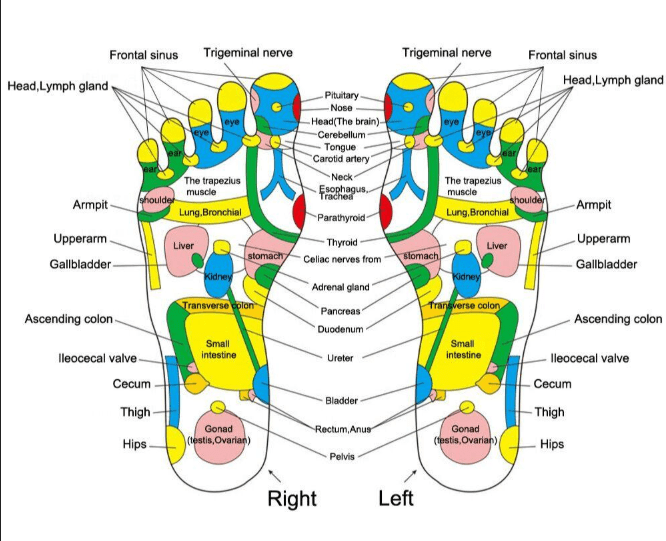
What is Reflexology?
Reflexology, also known as Zone Therapy, is the science of stimulating energy pathways that correspond to specific points on the feet, hands, and ears which correspond to the glands, organs and various parts of the body.
The original method used various tools and clamps to stimulate the 7,200 nerve endings found on the feet. Today we simply use our hands, specifically our thumbs and fingers. Modern Reflexology as practiced in America came from Dr. William Fitzgerald, born in 1872, he learned about Zone Therapy, what Reflexology was called at the time, while studying and practicing in Europe. He eventually became the head of the Nose and Throat Department while on staff at the Central London Ears, Nose, and Throat Hospital.
However, It is an Ancient Modality.

As you can see from the wall painting depicted above. It’s dated from the 6th Dynasty 2390 B.C., and resides in the tomb of Ankhmahor (the highest official under the King, The Physicians tomb. The hieroglyphic translation reads: “Don’t Hurt Me.” The practitioners reply, “I will act so you so you praise me.”
Reportedly there are similar ancient depictions of Reflexology on the walls of Mayan temples.
What are the health benefits of Reflexology?
Reflexology:
- Relieves tension
- Improves circulation and blood supply to the CNS
- Enhances the ability of nutrition to enter the cells, and waste to leave the cells
- Increases the flow of O2 throughout the body
- Removes uric acid from the body
- Helps the body achieve homeostasis. Overactive glands/organs are aided to return to normal. The same with underactive organs/glands.
Who Should Try Reflexology?
Everyone benefits including children, the elderly, and those with chronic or acute conditions.
A Reflexologist will take special care with expectant mothers, especially around the uterine area.
It is recommended that children have sessions shorter in duration but more frequently than adults.
It is safe for newborns and infants however instead of using the thumb to stimulate reflexes a Reflexologist will use the 2nd digit or index finger. Lighter pressure and touch is required.
Someone with a history of blood clots, should let their Reflexologist know.
Why it’s Safe and Beneficial for Everyone:
Reflexology helps the body achieve homeostasis. Homeostasis is the way a living system maintains a stable internal environment. Homeostasis is key to sustaining life.
Overactive glands and organs are aided to return to normal. While, underactive, are aided to the same. However, if the system is in a normal condition it cannot become unbalanced due to the stimulating of reflexes.
Get started on your Reflexology Journey, call a Reflexologist today!
Angry All the Time? Three Great Herbs that Can Help


If you prefer to watch the video instead, click here.
Did you know that in most ancient healing traditions, different emotions were associated with different organs or different body systems?
The Ancients thought emotions had organ correspondence. In our Western medical tradition, this belief system is mostly unacknowledged and certainly not utilized. Admittedly it can seem kind of wacky, but the Fiery Maple Philosophy incorporates this belief system. We’re believers!
Let’s pretend you, a friend, or maybe a family member is always angry…can you guess which organ angry outbursts would be associated with?
Did you guess the liver?
If you did; you’d be right.
The liver needs extra support when we’re angry.
In Traditional Chinese Medicine (TCM), they believe, the heart and the stomach need additional support as well. But that the liver is the primary organ associated with anger.
Let’s say you’re not necessarily a believer in emotions and organ/body systems correspondence. No problem. How about we consider this from more of a “scientific” perspective. What typically happens when you’re angry? Your heart rate goes up, your nervous systems on high alert, and you slip into flight or fight response because you’re angry. This is a human adaptive response from eons ago. Think about the root of most angry outbursts, most dustups can be distilled down to some sort of boundary violation. And when a boundary of ours or someone we loves is crossed what are we going to do. We’re going to defend our boundary (fight) or run (flight). That is what our body is preparing to do when we get angry. Our digestive system goes in shutdown mode, our heartbeat goes up, revving up our circulation, making sure our extremities are well nourished so we can use them to run or fight. So, from a scientific perspective, it makes sense that our liver would need to be supported if we’re angry because the liver is responsible for processing our stress hormones and any toxins and poisons. And of course, anything in excess is a poison. If you have an excess of stress hormones because you are angry, then your liver needs help clearing that out.
What Herbs Support the Liver?
Well, of course, bitters. In herbalism, bitters are a class of herbs that have a bitter taste and simulate your digestive system, among other uses like providing detoxification. In other cultures, eating bitter food and greens is much more common than in America. We don’t really eat bitter here, we eat mostly gravitate toward salt and sweet with a dash of sour. Though we are getting much better at eating spicy foods.
Most all of us need to eat more bitters, and bitters support the liver. They do that by, aiding digestion, and supporting the liver by removing toxins and poisons. Two of the most common ones are dandelion root and burdock root. I recommend dandelion because you can easily get find it in tea bags at any local grocery store. I mostly use loose leaf, but tea bags are great, quick and easy. Dandelion is an herb that most herbalists keep on hand due to its variety of use and safety profile.
None of the bitters are going to taste the best. They’re bitters after all!
But they will help you. Most bitters are taken from the root of the plant so they will also help ground you, a common trait of root medicine. They will bring you back to center, while supporting your liver and clearing out those stress hormones.
Now, if you’re an essential oil person, which I consider part of the herbal apothecary because most of them are derived from herbs; please consider lavender. Most people who use oils have lavender on hand. Lavender’s a great one. You can put a drop of it on the bottom of your foot before you go to bed (please always use a carrier oil) especially if you’re angry and you just need to go to bed. Lavender is very soothing, and will facilitate restful sleep, even if you are angry. Lavender tea is also helpful. A lot of people don’t realize, lavender, is edible and makes a great tea. If you have lavender, you can make it into a tea yourself. Lavender is a very soothing tea that is gentle, soothing and can be used by the elderly and children.
Remember, in Chinese medicine, you also need to support your heart when you’re angry and irritable.
Motherwort is a great herb, that is very nurturing and helpful to the heart. It’s considered a women’s herb. However, it is a uterine stimulant, so if you’re pregnant, you should avoid using Motherwort for anger management. But the Queen of Heart herbs, hawthorn is a wonderful option to consider. Hawthorn is an all-around soothing, beautiful plant. It’s very supportive, especially if you’re angry. My grandma took hawthorn daily for more than 20 years. She used hawthorn instead of pharmaceuticals for her congestive heart failure. I advise caution if you have congestive heart failure or some sort of heart disease and are on heart medication since hawthorn is a powerful herb that they can be used as a replacement for heart medication. It could be unwise to take heart medication and hawthorn daily. Having a cup of hawthorn tea on occasion is fine. But to take it, two to three times a day for an ongoing for anger condition, while on heart medication is not advised.
Lastly, chamomile must be mentioned it’s gentle, and children can have it as well. It’s soothing and calming to the nervous system, and helpful to the digestive system, which we know goes into shut down mode when we’re angry.
There are many more herbs that can be helpful to the liver, nervous system, and heart after an angry outburst and many herbs that can help regulate our system, so we are less prone to such outbursts.
If your anger condition is chronic, and you’re always riled up about something – yikes. Then you probably should go more upstream than just herbs and consider lifestyle adjustment/coaching/therapy/spiritual work.
Five Great Herb Books to Start You on Your Herbal Remedies Learning Journey

If you prefer to listen to the video version of the blog, click here to view.

People often tell me that they would love to learn more about herbal medicine and natural remedies but don’t know where to start. I always recommend: 1.) finding a local herbalist and asking them if they offer any in person workshops and classes and 2.) investing in a few great herbal books.
Though natural remedies are powerful and are to be used with caution and respect, herbs are not supposed to be complicated and difficult to use. Healing with the medicine nature provides is your birthright! Its information that you should have, and know. I studied very briefly with a naturopathic doctor in Detroit, who had a great philosophy. His hope is that one day there will be a healer in every home. He envisions a day when natural remedies are the most used medical remedies. And that people are self-sufficient, and able to address the most common ailments themselves without the need for pharmaceuticals and doctors. His vison isn’t very different from our past. It used to be the norm that every village or community had a shaman, wise women, or village elder who they went to for healing. Healing knowledge was commonly passed down within families and many families kept healing journals/materia medica/grimoires.
First, you’ll want at least one very good reference book.
Three Reference Book Options that I Personally Use:

The Illustrated Encyclopedia of Healing Remedies by Norman Shealy, MD, PhD has over a thousand natural remedies. It has a great index and a very good glossary. I love that the content is sectioned off in several ways. By body systems, medical systems, etc. The medical systems that are covered include Ayurveda, the ancient Indian method, Traditional Chinese Medicine (TCM), and also Western Herbalism. There is a section devoted to medicinal foods, and sections that cover vitamins, and homeopathic remedies. This book covers more than just herbs but would be a wonderful first reference book to start you on your herbal journey.

If you’d like a more compact, portable reference book then I recommend Herbal Remedies (Visual Reference Guide) by Andrew Chevallier. This book also has a very good index. There are a plethora of pictures which I think is an important aspect of herbal books, especially when you are starting out. This book claims to be easy-to- use, authoritative, informative, reliable, integrated. And I would agree. This was one of my very first herbal book purchases which I still use today for a quick reference.

A third option for a reference book is published by National Geographic entitled: National Geographic Guide to Medicinal Herbs: The World’s Most Effective Healing Plants by Andrew Weil, MD. This book is also categorized by body systems which I find extremely useful.
Bonus Books Recommendations:
If you have a more serious interest in herbal remedies, then you’ll want books for the advanced student.

The New Holistic Herbal, by David Hoffman is a classic and the book I was instructed to purchase as part of the first herbal course I completed. Topics include the chemistry of the herbs and their actions, and it goes more in depth about the different body systems than a reference book would. It has several indices including one for common herbal names and one for botanical names. There is also a repertory which lists aliments and a list of recommended herbs.

And lastly the most revered herbal book I have in my library; I “discovered” while studying and completing my herbal medicine apprenticeship at the Scottish School of Herbal Medicine. I love, love, love this book and use it weekly. It is my herb bible! The Energetics of Western Herbs, by Peter Holmes is a two-volume series. Link to Volume I and Volume II. It has a great index, with a ton of herbs both eastern and western included. It details the uses of herbs from both a western and traditional Chinese medicine perspective. For example, the herb hawthorn, a western herbal book would include its various actions. But this book also explains the energetics of an herb from an eastern perspective. It will include explanations such as ‘it tonifies the heart chi.’ It also breaks down all the constituents and actions of each herb. If you find chemistry fascinating and are interested in a scientific perspective. You will be in enzyme, saponin, triglyceride, tannin, etc. heaven.
Every home should have at least one natural remedy reference book, any of the above are a great place to start.
Please note that the above book links are Amazon affiliate links. Every book I recommended I personally bought and use.
Now is the Time for Blood Building in Preparation for the Winter Months


Did you know beets are an excellent source of many nutrients including calcium, iron, zinc, potassium, manganese, folate, vitamin: A, B, and C, plus many more. Their high iron content makes them a great blood builder, and they are known to be great for the liver, lymphatic and digestive systems. If you don’t like their taste (true confessions; I don’t!) try your best to cultivate a taste for them, if you can. Perhaps pickled, steamed, or baked beets will be more to your liking than raw ones. I’ve learned to enjoy them juiced with carrots and ginger. It’s wise to try them various ways including raw since cooking them results in losing most of their vitamin A, C, and B-complex nutrients.
As the days get shorter and we turn inward, now is the time to “blood build” in other ways by spending time with our kin and community. Friendsgiving and Thanksgiving are the typical November kin rituals. Hanukkah and Christmas are common December rituals, and of course humans have been acknowledging the Winter Solstice in some manner for millenia. But, perhaps your family doesn’t celebrate holidays, but that doesn’t mean you can’t create your own autumn traditions of spending more time with your nearest and dearest, whether it’s the blood family you inherited or the one you created. Be grateful for all those in your life who you love and who love you. Try to spend quality time with them and create memories. Life is much too short not to, and times are challenging. We never know when we will have to depend on each other. It is much easier to ask for and offer help when we consistently spend time with each other. The support from and association with our friends and family is powerful medicine; never let fear prevent this.
To a wonderful Holiday Season.
~ Shalina
Garlic is One of the Very Best Pharma Foods. Here’s why:

Garlic is antiviral, antifungal, antibacterial, anti-parasitic and anti-tumor!
It treats infections of all kinds including colds, flus, sore throats, bronchitis, stomach flu, and intestinal worms. Studies show taking garlic supplements reduces the number and length of colds.
Great for Digestion
It is a digestive aid and will relieve excessive gas, bloating, and other digestive issues.
It is Anti inflammatory
Garlic contains diallyl disulfide an anti-inflammatory compound that limits the effects of pro-inflammatory cytokines. It greatly reduces chronic inflammation which is the root of many diseases. . If you have sore and inflamed joints or muscles, you can rub them with garlic oil.
It’s Great for the Heart!
It reduces high blood pressure and is a blood cleanser. It also reduces cholesterol. Taking a daily garlic supplement (or eating roughly four cloves a day) helps blood flow more easily through the body and lower high blood pressure.
Decongestant Aid: Bronchitis & Whooping Cough
Garlic has a strong decongestant effect and expectorant action. It is useful for sickness where phlegm or mucus is a problem. It also reduces fever and kills off underlying infection.
It Lowers Blood Sugar in Diabetics:
It improves the function of the pancreas and increases the secretion of insulin. To be effective in controlling blood sugar levels it should be eaten at every meal in significant qualities. (Or capsules/tinctures taken at every meal.)
Studies found garlic supplements were more effective than placebo treatments at reducing triglycerides, fasting blood sugar, total cholesterol, LDL (bad) cholesterol, and HbA1c in people with diabetes.
A 2017 review included nine high quality studies that gave people. Study participants with type 2 diabetes and given daily garlic supplements in doses of 0.05–1.5 grams experienced significant reductions in blood sugar and blood lipid levels.
It is highly nutritious!
One raw clove contains: manganese, selenium, vitamin C, vitamin B6 and fiber. It also contains a good amount of calcium, copper, potassium, phosphorus, iron and vitamin B1.
Add more garlic to your diet and you will be adding to your health!!
The Care and Keeping of a Good Day!

True Confessions: I’ve experienced recurrent bouts of severe depression since early adulthood. It hit for the first time when I was a junior in college. Most likely kicked off due to a sports injury which temporarily sidelined my collegiate track career. Of course, that was just the surface reason, the deeper issue being my plans being completely disrupted by things outside of my control (my body breaking down due to overuse). Ever since then some years are better than others, but depression is a constant bete noire in my life. I’ve never been able to completely eradicate it.. It crouches in the corner ready to pounce if I am not on top of it.
Every person must do intense research and decide the matter for themselves.
I refuse medication because I actually read the inserts of medications that are recommended to me. I long ago decided that the temporary relief of depression (most SSRI only provide relief for a short amount of time) are not worth the risks. I’ve seen what those medications have done to friends and that path is not for me. Lastly, I am from a family that typically eschews modern pharmaceuticals because they “fix” one thing and break two others. I personally like my kidneys, liver and almost all bigpharma products don’t play nice with those organs. And though my brain often turns on me I know what it is capable of when it is firing on all cylinders and so mostly like it too. And with no trust fund, no husband, and senior citizen parents, it’s kinda all I got.
Depression is not the issue, depression is a symptom or an expression of the issue it is the warning bell, to suppress the warning bell is not to fix the problem, it is to create a bigger one somewhere else. If the fire alarm goes off and you stuff cotton in your ears or you unplug it because it is disturbing your peace, don’t be surprised when your house burns down.
It is my strong belief that my depression is due less to chemical imbalances in the brain and more to living in a patriarchal, capitalistic, violent, domineering, monotheistic, avaricious, anti-life and living culture. Coupled with my idealistic, perfectionistic nature that refuses to be content with a life that does not precisely live up to the vision I have set for it. In short, my depression is mostly situational. My life looks like how I want it to be, no depression, when it does not live up to my expectations, severe depression. Knowing this only helps slightly. Over the years I’ve found coping mechanisms that have helped tremendously. WHEN I PRACTICE THEM. Too often I don’t, when I don’t; I pay the price. If you also suffer from depression, lethargy, and anxiety perhaps the following tips will help you as well:
The Care and Keeping of a Good Day
1. Have you made a sincere effort to connect with the divine? Either by meditation, prayer, communing with nature or the reading of sacred texts. Did you start your day this way? Or have you scheduled and blocked out time for this important activity? Or is it routinely an afterthought?
2. Have you practiced gratitude? Made a list of what you are grateful for? Called someone to say thank you, or written a thank you note?
3. Have you selfcared? Taken a nap, taken time for your hobby? Journaled? Exercised? Taken the time to truly nurture your body with healthy chemical free food?
4. Have you reviewed your goals and life vision? Do you have goals and a life vision that you are excited about and have the confidence to pursue?
5. Have you done something kind for others? Your family, your community, parents, siblings, friends, colleagues, neighbors, the elderly that are in your circle?
6. Do you have something in the near future to look forward to? A vacation, recreational activity, reconnection with an old friend.
7. Has it been too long since you’ve ruthlessly edited? Commitments, things, entertainment, and lifestyle choices including people in your life that no longer fit who and what you are and your life priorities.
8. Did you do at least one fun thing today? Even if it was only fifteen minutes of fun and joy? No? Is joy, fun and delight even important to you? Do you think you don’t deserve it? You don’t have time? If so, what kind of life have you created where you don’t even have 15 minutes for fun?
If you regularly do all these things and on balance your mood, life, and outlook has not improved. Then deeper work is probably in order. You may want to start with an in depth reading of the following: Mind Renewal: A series of short articles on Depression.
To your health, XO,
Shalina Nicohl Rankin